

Choosing window shades for your Toronto home can seem simple until you start comparing fabrics, openness levels, privacy needs, sunlight exposure, room use, and operating styles. The right choice affects how comfortable a room feels throughout the day, not just how the window looks.
For Toronto homeowners, changing light conditions can make that decision more complex. A bright living room may need glare control, while a bedroom may need stronger privacy and softer morning light.
Window shade options come in different styles because no single treatment suits every room. Roman, solar, sun, and motorized designs each solve a different mix of practical and visual needs.
A thoughtful choice starts with understanding how each style works, where it performs best, and what trade-offs to expect before ordering. In this blog post, we will walk through different window shades for your Toronto home to help you make your choice with more confidence.
How Roman, Solar, Sun & Motorized Shades Meet Different Needs
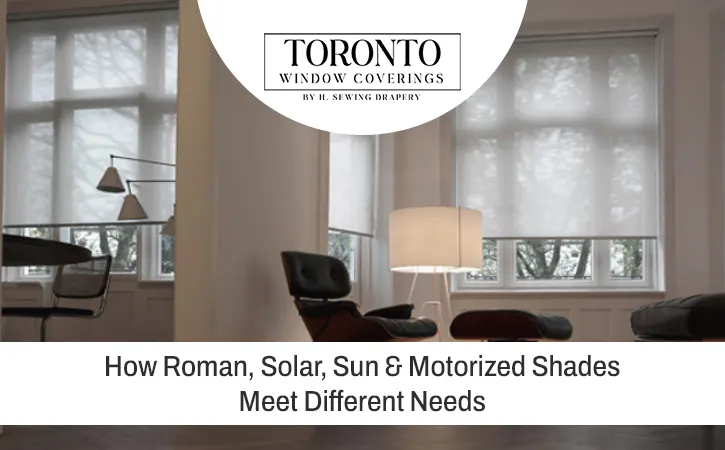
Each style of shade handles light, privacy, appearance, and daily operation differently. Understanding those differences makes comparison much easier.
1. Roman Shades Add Softness While Giving You Flexible Light Control
Roman shades are a great option if you want a soft, furnished look without hanging full drapery. Their fabric folds bring visual warmth to a room, making them ideal for spaces like bedrooms, dining rooms, and living areas where style is just as important as privacy. If you are comparing Roman shades in Toronto stores, start by deciding how much light you want to filter into the room.
A lighter fabric like organza or sheer linen softens natural daylight, while a room-darkening lining gives you much better control over light for sleeping or watching TV. It helps to match the fabric colour and pattern to your walls, furniture, and flooring rather than picking a style on its own.
A bold pattern can easily become the main feature in a simple space, while a neutral tone supports the rest of your decor. Keep in mind that Roman shades stack at the top when raised, so think about how much glass you want exposed before settling on a design.
2. Sun Shades Work Best When You First Understand Where Harsh Light Comes From
Sun (a.k.a. solar) shades are a great choice for a room that gets direct sunlight for hours, and you want to soften that harsh glare without losing your natural light. The main goal here isn’t just making the space dark. It’s about managing glare, heat, UV exposure, and visibility so that the room stays comfortable for how you actually use it.
If you’re looking at sun shades in Toronto, take a moment to think about where your furniture, TV, and workstations are placed, as well as the times of day when the sun is brightest. Keep in mind that darker rooms don’t always need darker fabrics; the fabric’s performance and openness level matter much more than appearance alone.
For example, a living room with large south-facing windows needs a different level of light control than a small bedroom that experiences indirect light. Taking time to notice how light moves through the room throughout the day helps you pick a shade that performs just as well as it looks.
3. Motorized Shades Make Sense When Convenience Solves an Everyday Problem
Motorized shades are worth considering when convenience solves a real daily problem, not just adds technology. They are especially practical for tall windows, skylights, large groups of windows, or coverings that require frequent adjustments.
When comparing motorized shade options in Toronto, think about how you want to control them, where power will come from, and whether scheduled operation would be useful.
Motorization also reduces the need for accessible cords or chains, making their operation much simpler for busy households. For instance, you can adjust several shades in a bright living area together instead of raising and lowering them one by one. Good planning for Toronto shades should also account for future routines, as a feature that seems optional during installation can quickly become valuable for hard-to-reach windows.
Ultimately, the best reason to choose motorization is practical: it makes managing light, privacy, and everyday use noticeably easier.
4. The Room’s Purpose Should Come Before Colour or Style
Start with how you usually require privacy and better light blocking, while a living room often works best with soft daylight and a clear view outside. Kitchens need easy-to-clean materials, and home offices need good glare control for computer screens.
Keep in mind that a room’s needs change throughout the day. A front-facing family room might feel bright and open during the day but need more privacy at night when the interior lights are on.
Also, consider how often you will adjust the shade. If you plan to move it several times a day, pick an option that is smooth and easy to operate.
Making your choice based on room function keeps your decision practical and stops you from picking a style just because it looks great in a showroom photo.
5. Privacy Needs Change Between Daytime and Evening
Privacy isn’t just a choice between completely open or totally closed. How much coverage you need depends on your window’s height, nearby homes, street visibility, room layout, and the time of day. Some fabrics let you keep a view of the outdoors during the daytime while blocking passers-by from seeing inside, but that balance changes once the sun goes down and interior lights turn on.
That is why homeowners in Toronto looking for shades should evaluate daytime and nighttime privacy separately. Bedrooms and bathrooms tend to require much more coverage than a living room facing a private backyard. For instance, a light screen shade might work well in the afternoon, but you may want an extra layer if you need complete privacy at night. You also want to keep your view in mind. Blocking a window permanently for privacy can make a room feel closed off.
A better approach is to decide when you actually need privacy, how much of the outside view you want to keep, and whether layering treatments gives you the best of both worlds.
6. Correct Measurements Affect Both Appearance and Everyday Use
Accurate measurements are essential because even high-quality fabric will look off if the shade doesn’t fit your window correctly. Before ordering, decide whether you want an inside or outside mount. You will also want to check the depth, width, height, handles, trim, and any nearby obstructions. Make sure to consider how your window opens so the shade won’t interfere with cranks, handles, or doors.
An outside mount works well for shallow frames, while an inside mount offers a clean, built-in look if you have enough depth. Consistency is key when you have multiple windows side by side, as tiny differences in placement stand out across a wall. Measuring carefully and discussing installation requirements ahead of time helps you avoid surprises and ensures a seamless, intentional look.
Consider sunlight exposure, your privacy needs, window orientation, daily usage, interior design, accessibility, and how frequently the shade will be adjusted. Roman, solar, sun, and motorized shades each offer distinct advantages, with the optimal choice depending on your specific functional needs. For Toronto homeowners evaluating their options when it comes to shades, aligning fabric choice and operation with functionality helps avoid costly mistakes. Toronto Window Coverings provides a variety of shade styles and motorized features to help you compare appropriate solutions. Ultimately, a well-planned choice ensures that your space remains comfortable, functional, and visually balanced.
- Categories:
- Window Treatments